

I want to start by saying that learning how to get rid of weeds is not just about making a garden look neat. When I began paying closer attention to weeds, I realized they are signals of soil conditions, maintenance habits, and long term land care decisions. Weeds compete with plants for water, nutrients, sunlight, and space, but they also reveal where the ground is stressed, compacted, or unbalanced. Understanding weeds helps create healthier soil and stronger plants rather than relying only on quick fixes.
In this article, I explain how to get rid of weeds using a thoughtful, practical, and sustainable approach. I cover why weeds grow, different types of weeds, manual and natural removal methods, chemical options, prevention strategies, seasonal planning, and long term weed control. Everything is written in my own words, based on gardening logic, land care principles, and real world observation rather than copied sources. The goal is to provide clear, detailed, and healthy guidance that works for home gardens, lawns, pathways, and cultivated land.
Understanding Why Weeds Grow
What Weeds Really Are
Weeds are simply plants growing where they are not wanted. They are highly adaptable and grow quickly in disturbed or neglected soil. Many weeds spread through seeds, roots, or runners, which makes them persistent if not handled properly.
Rather than being random invaders, weeds respond to conditions such as bare soil, excess moisture, compacted ground, or nutrient imbalance. Addressing these conditions reduces weed growth naturally.
The Relationship Between Soil and Weeds
Healthy soil supports desired plants that crowd out weeds. Poor soil invites weeds that tolerate stress. When soil lacks organic matter or proper drainage, weeds gain an advantage.
Improving soil quality is one of the most effective long term weed control strategies.
Types of Weeds You Should Know
Annual Weeds
Annual weeds complete their life cycle in one season. They grow fast, produce seeds, and die. Examples include crabgrass and chickweed. These weeds are easiest to control if removed before they seed.
Stopping seed production is the key to controlling annual weeds.
Perennial Weeds
Perennial weeds live for multiple years and often spread through roots. Dandelions and bindweed fall into this category. Pulling only the top growth does not eliminate them.
Root removal or repeated weakening is required for control.
Biennial Weeds
Biennial weeds grow leaves the first year and flower the second. They are less common but still persistent. Removing them early prevents spread.
Understanding weed type helps determine the best removal method.
Manual Methods to Get Rid of Weeds
Hand Pulling and Digging
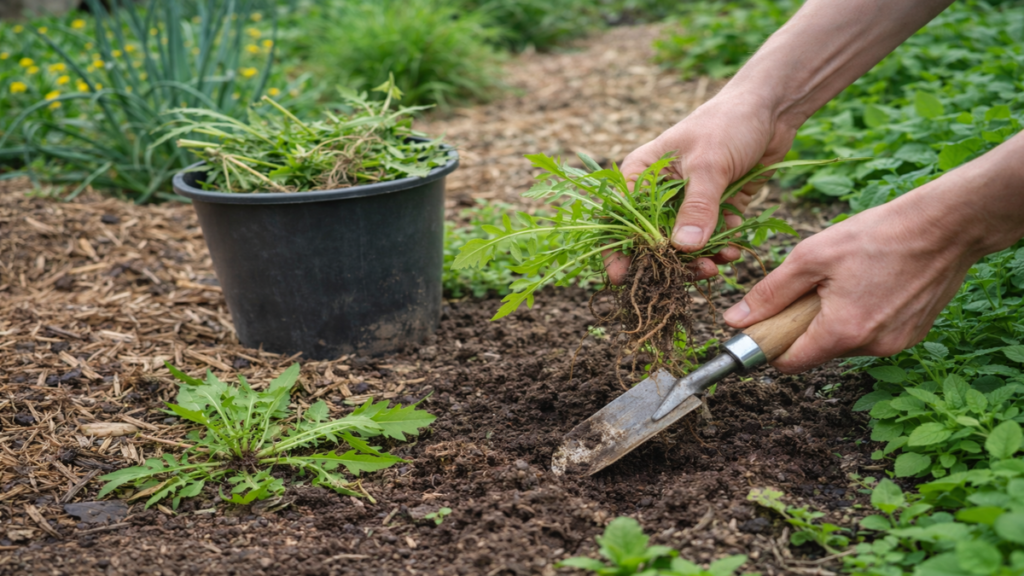
Hand pulling is one of the most reliable methods when done correctly. Pull weeds when soil is moist so roots come out easily. For deep rooted weeds, use a hand fork or weeding tool.
Removing the entire root system prevents regrowth.
Hoeing and Surface Cutting
Hoeing works well for young weeds with shallow roots. Cutting weeds at soil level on a sunny day dries them out and prevents recovery.
Regular hoeing keeps weeds from establishing.
Smothering and Blocking Light
Weeds need sunlight. Covering soil with cardboard, newspaper, or landscape fabric blocks light and kills weeds gradually.
This method is especially effective in garden beds and pathways.
Natural and Organic Weed Control Methods
Mulching for Weed Suppression
Mulch is one of the most effective natural weed control methods. Organic mulch such as straw, wood chips, or leaves blocks sunlight and improves soil health.
A thick mulch layer reduces weed germination significantly.
Boiling Water Treatment
Pouring boiling water directly onto weeds damages plant cells and kills growth. This works best for weeds in cracks and driveways.
Avoid using this method near desired plants.
Vinegar Based Solutions
Natural vinegar can burn weed leaves when sprayed in direct sunlight. It works best on young weeds and requires repeated application.
This method treats surface growth but may not kill roots.
Salt With Caution
Salt dehydrates plants but can damage soil long term. Use only in non planting areas such as sidewalks.
Excess salt harms soil structure.
Chemical Weed Control Explained Carefully
When Chemical Control Is Necessary
Sometimes weeds become unmanageable, especially invasive species. Chemical control may be considered as a last resort.
Responsible use minimizes environmental impact.
Selective vs Non Selective Herbicides
Selective herbicides target specific weeds without harming grass. Non selective herbicides kill all plants they contact.
Understanding product type prevents accidental damage.
Safe Application Practices
Apply chemicals on calm days, follow instructions carefully, and avoid overuse. Protective gear reduces health risks.
Chemical use should be precise and limited.
Weed Prevention Strategies
Keep Soil Covered
Bare soil invites weeds. Ground covers, mulch, and dense planting reduce open space.
Coverage is a powerful prevention tool.
Plant Densely and Wisely
Healthy plants shade soil and outcompete weeds. Choose plants suited to your climate and soil.
Strong plants mean fewer weeds.
Regular Maintenance
Weeds are easier to control when small. Weekly inspection prevents spread.
Consistency saves effort.
Lawn Specific Weed Control
Mowing at Proper Height
Cutting grass too short weakens it and allows weeds to grow. Taller grass shades soil and blocks weed seeds.
Proper mowing strengthens lawns.
Overseeding and Lawn Health
Thick lawns resist weeds. Overseeding fills gaps and improves density.
Healthy lawns suppress weeds naturally.
Watering Correctly
Deep, infrequent watering strengthens grass roots while discouraging shallow weed roots.
Smart watering supports balance.
Garden Bed Weed Control
Raised Beds Advantages
Raised beds warm faster and drain better, reducing weed pressure.
Controlled soil limits weed intrusion.
Crop Rotation and Planning
Rotating crops prevents weed adaptation and soil depletion.
Planning improves results.
Companion Planting
Certain plants shade soil and reduce weed space.
Plant diversity supports balance.
Seasonal Weed Management
Spring Weed Control
Spring is critical for stopping seed germination. Mulch early and remove young weeds promptly.
Early action reduces workload.
Summer Weed Control
Weeds grow rapidly in summer. Focus on removal before flowering.
Preventing seeds protects future seasons.
Fall Weed Control
Fall is ideal for targeting perennial weeds as they store energy in roots.
Late season control weakens weeds long term.
Winter Preparation
Cover soil with mulch or cover crops to prevent winter weeds.
Preparation supports next season success.
Comparing Weed Control Methods
| Method | Effectiveness | Soil Impact | Best Use |
|---|---|---|---|
| Hand Pulling | High | Positive | Small areas |
| Mulching | Very High | Improves soil | Gardens |
| Vinegar | Medium | Neutral | Hard surfaces |
| Herbicides | High | Variable | Severe cases |
This comparison helps choose the right approach.
Common Weed Control Mistakes
Ignoring Roots
Removing only leaves allows regrowth. Root control is essential.
Depth matters.
Waiting Too Long
Large weeds spread seeds quickly. Early removal saves time.
Timing is critical.
Overusing Chemicals
Excessive chemicals damage soil and beneficial organisms.
Balance protects ecosystems.
Long Term Weed Control Philosophy
Focus on Soil Health
Healthy soil reduces weeds naturally. Compost, organic matter, and aeration improve balance.
Soil care is weed prevention.
Observe and Adapt
Different areas require different solutions. Observation leads to smarter control.
Adaptation improves success.
Accept Some Weeds
Not every weed must be eliminated. Some indicate soil improvement areas.
Management is better than perfection.
Sustainable Weed Control Practices
Composting Pulled Weeds
Non seeding weeds can be composted safely.
Recycling nutrients supports soil.
Using Cover Crops
Cover crops protect soil and suppress weeds between seasons.
Living mulch strengthens systems.
Reducing Disturbance
Frequent soil disturbance brings weed seeds to surface.
Minimal disturbance reduces germination.
Conclusion
I see learning how to get rid of weeds as an ongoing relationship with soil, plants, and timing rather than a one time task. Weeds respond to conditions, and by improving those conditions, weed pressure decreases naturally. Whether through hand pulling, mulching, soil improvement, or careful chemical use, the most effective approach combines prevention, consistency, and observation.
Getting rid of weeds is not about control alone. It is about balance. When soil is healthy and plants are strong, weeds lose their advantage. With patience and smart practices, weed management becomes easier, more sustainable, and far less frustrating over time.
Click Here For More Blog Posts!
FAQs
What is the fastest way to get rid of weeds
Hand pulling or hoeing young weeds combined with mulching gives quick and lasting results.
Can weeds be eliminated permanently
Complete elimination is unrealistic, but long term control is achievable through soil health and prevention.
Are natural weed killers effective
Yes, when used correctly, natural methods suppress weeds without harming soil.
Is mulching better than chemicals
Mulching improves soil while controlling weeds, making it a better long term option.
Why do weeds keep coming back
Weeds return due to seeds in soil, weak plant competition, or poor soil conditions.