
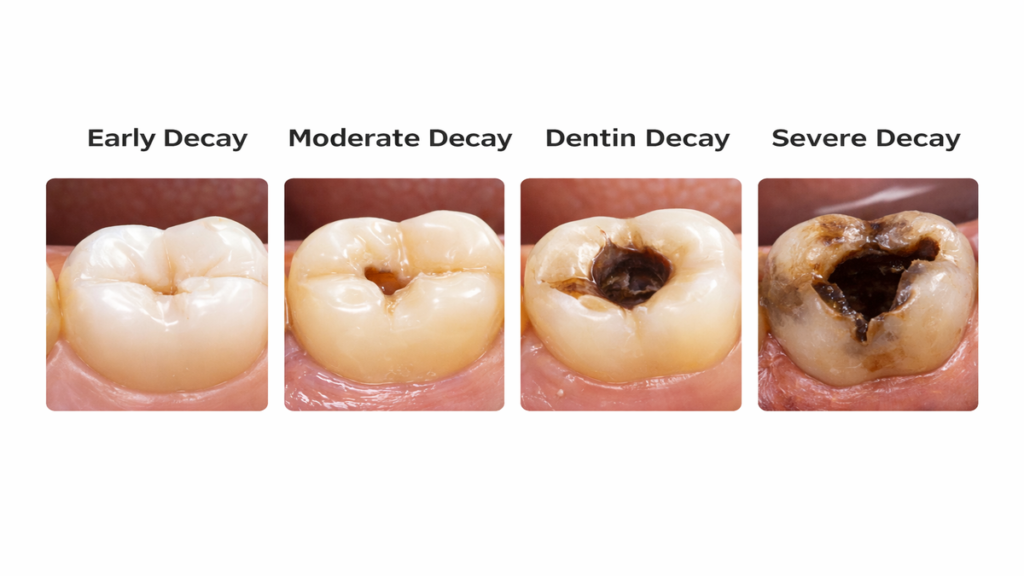

I want to approach the question of what does a cavity look like from a real life and human perspective, because cavities are something most people hear about early in life yet rarely understand clearly. When I first began paying attention to my own dental health, I realized that cavities are not always obvious holes or dramatic black spots as they are often described. In reality, cavities can look very different depending on their stage, location, and severity. This article explains cavities in a detailed, visual, and practical way so readers can recognize early warning signs, understand progression, and know when professional care is necessary.
Understanding What a Cavity Actually Is
A cavity is an area of tooth damage caused by prolonged exposure to acids produced by bacteria in the mouth. These acids slowly dissolve the hard outer layer of the tooth, known as enamel, and can eventually reach deeper layers if left untreated. Cavities do not form overnight. They develop gradually, often starting with subtle changes that are easy to miss without proper awareness.
What makes cavities tricky is that they are not always painful at first. Many people assume they will feel discomfort immediately, but early cavities can exist silently. This is why understanding what a cavity looks like at different stages is so important for prevention and early treatment.
How Healthy Teeth Normally Look
Before explaining what cavities look like, it helps to understand what a healthy tooth looks like. Healthy teeth typically appear smooth, glossy, and evenly colored. The shade may range from bright white to slightly yellow, depending on genetics and enamel thickness, but the surface remains intact and uniform.
A healthy tooth does not have rough patches, dark lines, or visible pits. The edges are smooth, and light reflects evenly off the enamel. Gums around healthy teeth appear pink and firm, without swelling or redness.
What a Cavity Looks Like in the Earliest Stage
In its earliest stage, a cavity often looks nothing like a hole. This is one of the biggest misconceptions people have. Early cavities usually appear as small white spots on the tooth surface. These white spots indicate enamel demineralization, meaning minerals have been lost from the enamel due to acid exposure.
At this stage, the tooth surface may still feel smooth, and there is usually no pain. The white spot may be chalky or dull compared to the surrounding enamel. Many people mistake this change for harmless discoloration or plaque buildup, but it is actually the first visible sign of decay.
Visual Changes as a Cavity Progresses
As the cavity continues to develop, its appearance changes. The enamel weakens further, and the affected area may darken. Instead of white, the spot can turn light brown or yellow. The surface may begin to feel slightly rough when touched with the tongue.
At this stage, the tooth structure is compromised but not yet collapsed. The cavity may still be shallow, but it is actively progressing. Sensitivity to cold or sweet foods may start to appear, although pain is still often mild or intermittent.
What a Visible Hole or Pit Looks Like
When people imagine cavities, this is usually the stage they think of. Once decay breaks through the enamel, a visible hole or pit can form. This hole may appear small at first, sometimes no bigger than a pinhead, but it can grow quickly.
The color of the cavity at this stage can vary. Some cavities look dark brown or black, while others may appear yellow or gray. The edges of the hole are often rough and uneven. Food particles may get trapped easily, making the cavity more noticeable and uncomfortable.
Appearance of Cavities Between Teeth
Not all cavities are easy to see. Cavities that form between teeth are especially difficult to detect without dental tools or X rays. Visually, these cavities may only show subtle shadows or darkened lines near the contact point between two teeth.
From the front, the teeth may appear normal, which is why regular dental checkups are important. Between tooth cavities can grow significantly before becoming visible or painful.
What a Cavity Looks Like Under a Dental Filling
If a cavity has been previously treated with a filling, new decay can still form around or beneath it. In such cases, the cavity may appear as dark staining around the edges of the filling. The filling itself may feel loose or uneven.
This type of cavity is harder to identify without professional evaluation, but visible changes around dental work should never be ignored.
Differences in Cavity Appearance Based on Tooth Location
Cavities can look different depending on where they form in the mouth.
Cavities on Front Teeth
Cavities on front teeth are usually easier to spot. They may appear as white spots, brown discoloration, or small holes on the visible surface. Because these teeth are exposed when smiling, cosmetic changes are often noticed earlier.
Cavities on Molars
Molars have deep grooves and pits, making them more prone to cavities. Decay in these grooves may appear as dark lines or dots on the chewing surface. Over time, these areas can collapse into larger holes.
Cavities Near the Gumline
Cavities that form near the gumline often appear as dark bands or notches at the base of the tooth. These cavities are common in adults and can progress quickly because the enamel is thinner in this area.
How Cavities Look When They Reach Dentin
Once a cavity reaches the dentin layer beneath the enamel, changes become more noticeable. Dentin is softer and darker than enamel, so cavities often appear deeper and more pronounced.
At this stage, sensitivity increases significantly. The cavity may look larger, and the surrounding tooth structure may appear fragile. Pain when eating or drinking hot, cold, or sweet substances becomes more common.
What a Severe Cavity Looks Like
A severe cavity is hard to miss. The tooth may have a large visible hole, and the surrounding area can appear dark and broken. In some cases, parts of the tooth may crumble away.
The tooth may look discolored overall, often appearing gray or black. Swelling or redness of the surrounding gums can also be visible. At this stage, infection is likely, and pain may be constant.
Cavities in Children and Baby Teeth
Cavities in children often look different from those in adults. Baby teeth have thinner enamel, so decay spreads faster. Early childhood cavities may appear as white or brown spots near the gumline.
As they progress, these spots can quickly turn into visible holes. Because children may not always communicate discomfort clearly, visual signs play an important role in detection.
Comparing Cavity Stages Visually
| Stage of Cavity | Typical Appearance | Common Symptoms |
|---|---|---|
| Early enamel decay | White chalky spot | No pain |
| Moderate decay | Light brown or yellow area | Mild sensitivity |
| Enamel breakdown | Small visible hole | Sensitivity to sweets |
| Dentin involvement | Larger dark cavity | Pain with temperature |
| Severe decay | Large hole, broken tooth | Constant pain, swelling |
This table shows how cavities evolve visually and symptomatically over time.
Why Cavities Look Different From Person to Person
Cavities do not look the same in everyone. Factors such as saliva composition, oral hygiene habits, diet, genetics, and fluoride exposure all influence how decay develops and appears.
Some people develop dark cavities quickly, while others experience lighter discoloration for a long time before structural damage occurs. This variability is why visual inspection alone is not always enough to assess severity.
Common Misinterpretations of Cavity Appearance
Many people mistake cavities for stains or harmless discoloration. Coffee, tea, and smoking can stain teeth, creating dark spots that look similar to cavities. However, stains usually affect the surface evenly and do not feel rough or sticky.
Plaque buildup can also resemble early decay but typically comes off with brushing, while cavities do not.
When a Cavity Is Not Visible at All
It is important to understand that not all cavities are visible to the naked eye. Some cavities develop beneath the surface or between teeth and only show up on dental X rays.
This is why absence of visible damage does not always mean absence of decay.
Why Early Detection Matters
Cavities caught early can often be reversed or stabilized with proper care. When decay is limited to enamel, remineralization through fluoride treatments and improved hygiene may stop progression.
Once a cavity reaches dentin, restorative treatment is usually required. Understanding what cavities look like at early stages empowers people to seek care sooner.
How Dentists Identify Cavities Beyond Visual Inspection
Dentists use a combination of visual examination, tactile probing, and imaging to identify cavities. They look for color changes, texture differences, and structural weaknesses.
Special tools allow dentists to detect softness in enamel that may not yet appear as a hole. This professional evaluation is critical for accurate diagnosis.
Preventing Cavities Before They Become Visible
Good oral hygiene practices can prevent cavities from forming or progressing. Regular brushing with fluoride toothpaste, flossing, and limiting sugary foods reduce acid exposure.
Routine dental visits allow for early detection and intervention, often before cavities become visible or painful.
Final Thoughts
I see cavities not as sudden dental disasters but as gradual changes that give many visual warnings along the way. Understanding what a cavity looks like at each stage removes fear and confusion and replaces them with awareness.
Cavities are common, but they are also largely preventable. By paying attention to subtle changes in tooth color, texture, and sensitivity, people can protect their dental health and avoid more serious problems in the future.
Click Here For More Blog Posts!
FAQs
What does an early cavity look like
An early cavity usually looks like a small white or chalky spot on the tooth surface with no pain.
Can a cavity be brown instead of black
Yes, cavities often appear brown or yellow before turning dark as decay progresses.
Are cavities always visible to the eye
No, many cavities form between teeth or under enamel and require dental X rays to detect.
Do cavities always cause pain
Cavities do not always cause pain, especially in early stages, which is why visual awareness matters.
Can a cavity heal on its own
Very early enamel damage may be stabilized, but true cavities cannot heal without professional care.